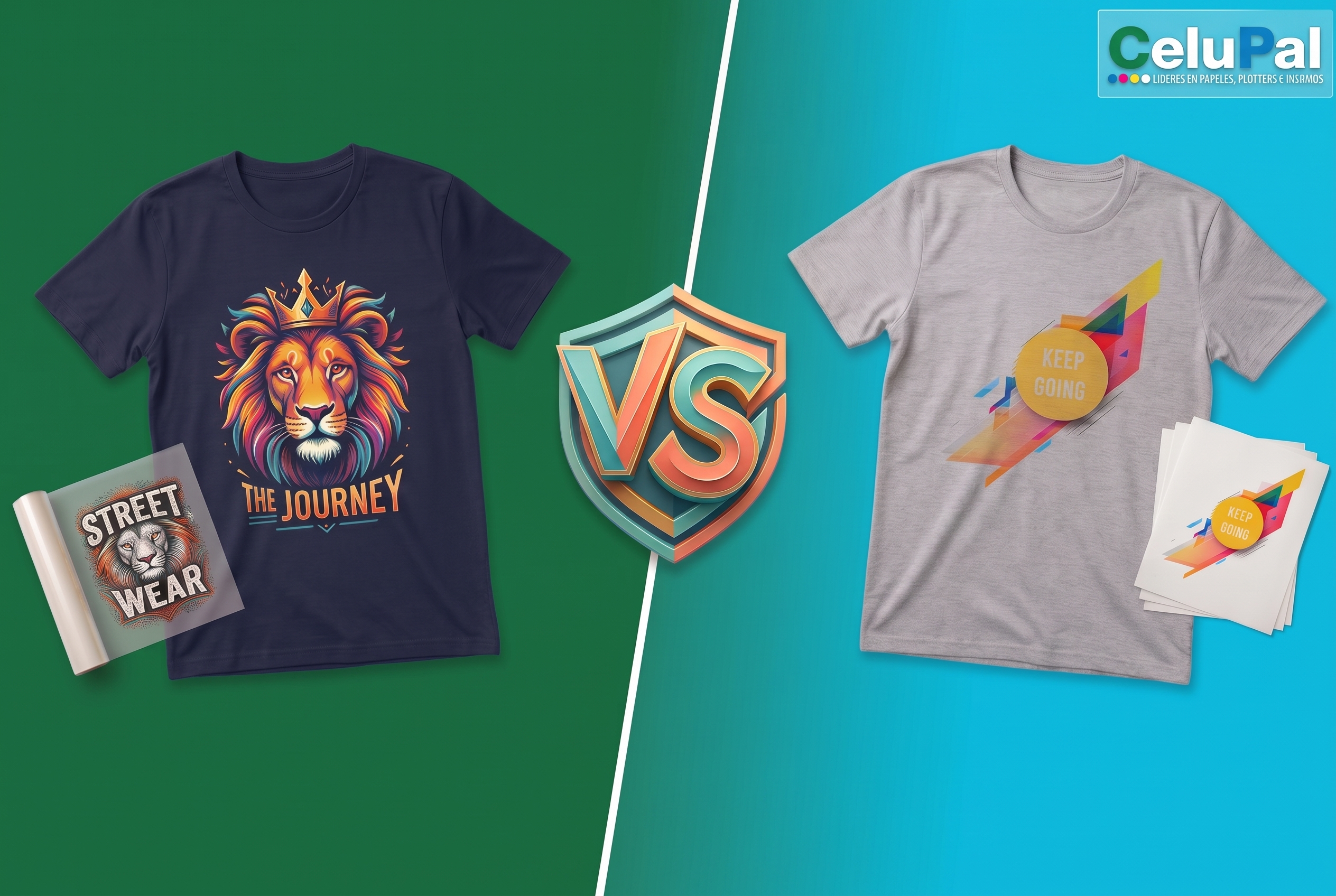
Dye-Sublimation vs. DTF: They Are Not Competitors. The Real Question Is Which Fits Your Business Model
MEXICO CITY | Mexico – July 2026 – Ever since DTF entered the market with full force, the most common question in the textile printing industry has been the same: dye-sublimation or DTF? The short answer is that the question itself is flawed. These are not technologies competing for the exact same market. They are tools built for different business models, and the right choice depends on who your clients are, how they order, and what volumes they run—not on which technology is ‘better’ in the abstract.
How Each Technology Works: The Essentials
Transfer dye-sublimation converts dye into a gas using heat, fusing it directly into polyester fibers. As a result, color becomes part of the fabric rather than a surface layer: zero hand feel, no cracking or peeling, and perfect washability. Its limitation is structural: it only works on polyester substrates (or polyester-coated materials) and requires white or very light fabrics, as white ink does not exist in the sublimation process.
DTF (Direct to Film) operates differently: it prints the design onto a PET film using CMYK plus white ink, applies a hot-melt adhesive powder, heat-cures the film, and transfers the graphic onto the garment with a heat press. The result is an ink layer adhered to the fabric: featuring a light hand feel on full-coverage prints, but fully functional on virtually any substrate, any garment color, and starting from single-unit runs.
When Dye-Sublimation Wins: Volume, Polyester, Speed
Sublimation is the right technology when the business model centers on high-volume production using polyester substrates. Its core advantage isn’t flexibility—it’s high-speed execution and lower cost per meter at scale.
An industrial system like the Mimaki TIGER 600-1800B, equipped with 8 Ricoh Gen5 printheads and output speeds of 395 m²/h, generates hundreds of meters of sublimated fabric per shift. In that industrial environment—sportswear manufacturers, soft signage producers, and polyester fashion brands—sublimation offers a cost per square meter that DTF cannot match on large runs.
Sublimation also wins in color fidelity on white polyester: the color gamut is broader, colors appear more vibrant, and durability is unmatched. For flags, textile displays, and high-performance athletic apparel, that color precision is just as critical as speed.
Ideal Sublimation Segment: Sportswear manufacturers, soft signage and flag producers, industrial textile sublimation shops, and makers of mousepads, cushions, or polyester blanks.
When DTF Wins: Variety, Dark Fabrics, Short Runs
DTF is the optimal technology when the business model demands versatility: fabric blends, dark garments, small production runs, and unit-level customization.
DTF’s white ink is its primary operational differentiator over dye-sublimation. It enables direct decoration on black, navy, dark red, or any dark textile—something sublimation simply cannot accomplish. This unlocks the market for cotton t-shirts, hoodies, denim, blended fabrics, and mixed-material technical garments.
DTF setup costs are virtually zero: the same printer producing a single custom shirt can run a batch of one thousand without extra prep work. This makes DTF ideal for print-on-demand models, e-commerce storefronts producing to order, and customization shops running unique artwork on every job.
Ideal DTF Segment: Garment decoration shops, print-on-demand e-commerce platforms, corporate apparel suppliers using blended fabrics, and print providers decorating dark garments, short runs, or custom one-offs.
The Most Compelling Scenario: Coexistence
The most strategic question isn’t ‘sublimation or DTF.’ It is: ‘In what ratio should both coexist in my operation?’
A print shop producing high-volume polyester sportswear for clubs and schools (sublimation), while simultaneously selling custom cotton apparel for retail and e-commerce markets (DTF), does not need to choose between technologies. It needs both because it serves two entirely different order profiles. Rather than cannibalizing each other, each technology serves a distinct client base, with different workflows and pricing tiers.
Celupal carries both technologies in its portfolio: the TIGER 600-1800B for industrial dye-sublimation and the Mimaki TxF line for DTF. The technical team is equipped to analyze which path—or combination—best matches your current and projected operational profile.
According to the Specialty Graphic Imaging Association’s Textile Decoration Technology Report (SGIA, 2023), 34% of North American garment decoration shops adopting DTF between 2021 and 2023 already operated sublimation equipment. In most cases, DTF did not replace sublimation—it expanded the shop’s application portfolio and opened new customer segments.
The Question That Matters Before Investing
Before evaluating dye-sublimation or DTF hardware, the most useful question isn’t technical; it’s commercial: What does your current order profile look like today, and what order profile do you want to target over the next 18 months?
If 90% of your production involves light-colored polyester in high volumes, dye-sublimation makes the most sense. If you handle varied fabric types, dark garments, short runs, and custom orders, DTF is the logical starting point. If your business addresses both demands—or aims to build the second—combining both technologies provides the most complete solution.
Visit Celupal at Booth C10 during FESPA Mexico 2026 to see both technologies running live and discuss which model aligns best with your business strategy. If you cannot attend, account representatives are available for consultation before, during, and after the show.

 English
  French